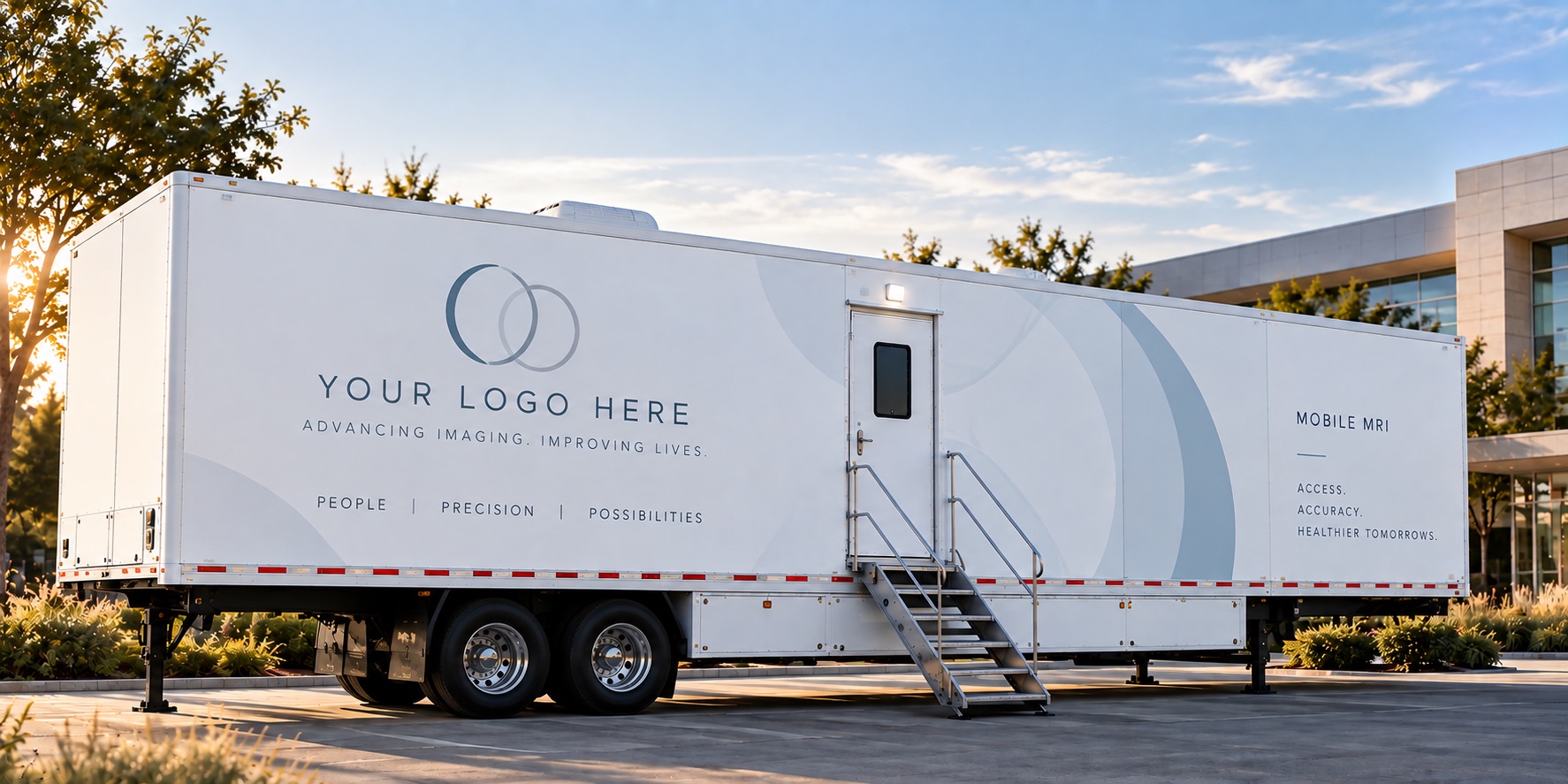
High-field mobile MRI, ready to deploy nationwide.
Add diagnostic capacity in weeks, not months. Catalyst places a physician-owned Siemens 1.5T mobile MRI at your site, with subspecialty reads and turnkey operations available, so you skip the multi-million-dollar cost and the long build of a fixed install.
- Field strength
- 1.5 T
- Gradients
- 45 mT/m @ 200 T/m/s
- Bore
- 70 cm wide-open
- RF channels
- 48 Tim 4G
A fixed install takes eighteen months. This takes a pad and a power drop.
Building it fixed
- Six to eighteen months of construction and permitting
- Multi-million-dollar capital commitment, on your balance sheet
- Static capacity, sized to a guess about next year's volume
- Every month of the build is a month of referrals leaving
Placing a Catalyst unit
- Deploys in weeks, on an inspected unit that exists today
- Predictable monthly cost, an operating expense rather than capital
- Flexible term with an early-return option, scaled to your volume
- A radiologist owner-operator answerable for the program
Most mobile MRI is a machine on a lot. This is an imaging program.
Rapid deployment
Inspected, ready, available now. Transport, setup and testing are ours to run.
Capital conservation
Solve a capacity or downtime problem as an operating expense instead of a build.
Physician-owned accountability
A radiologist owner-operator stands behind the program, not a rental desk.
Subspecialty reads available
Fellowship-trained neuroradiology, with same-day turnaround on routine work.
Patients stay in-network
Stop referral leakage while your long-term imaging plan takes shape.
Premium configuration
XQ gradients, a 70 cm bore and 48 channels. Not the typical rental magnet.
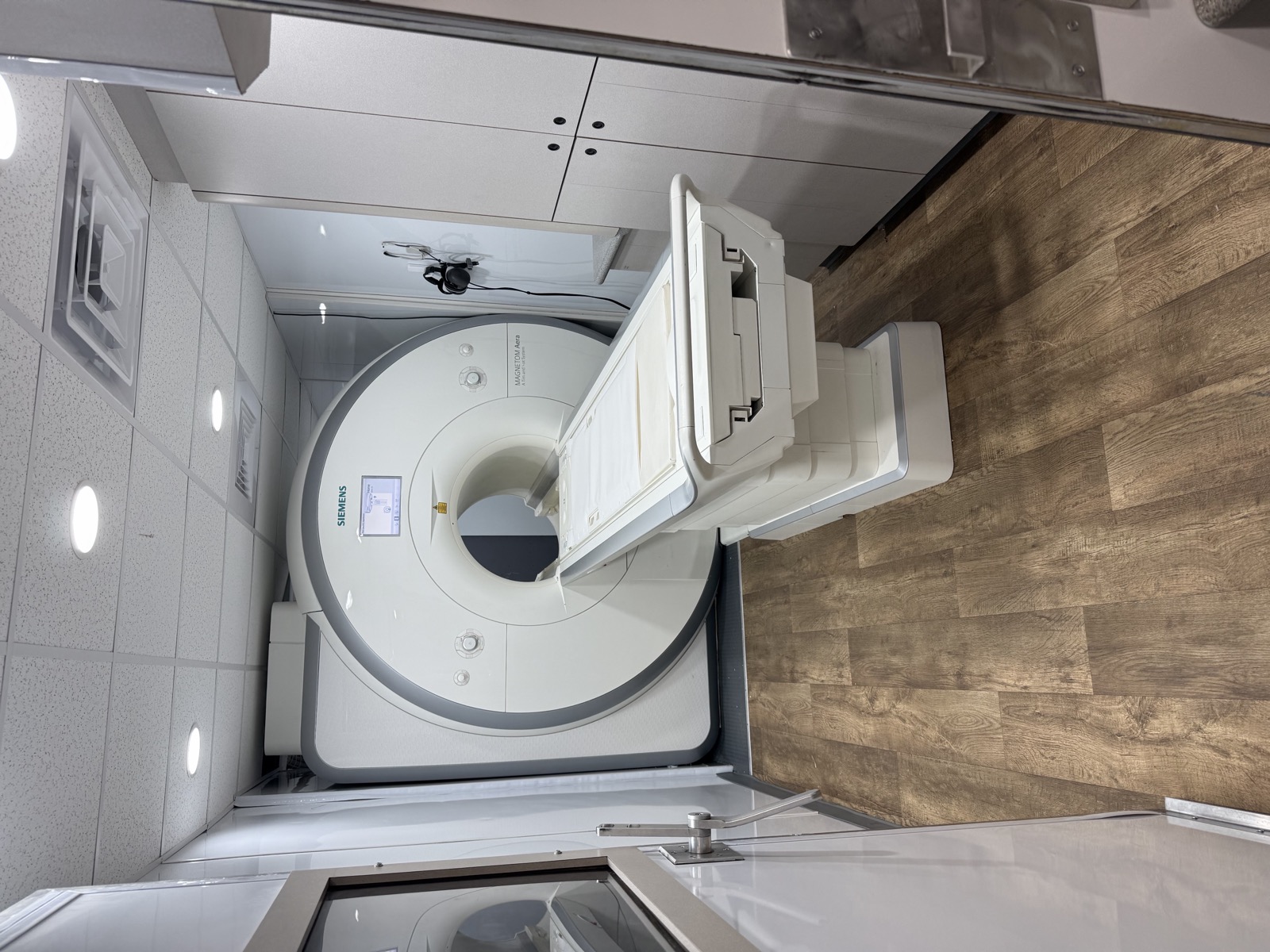
Siemens MAGNETOM Aera 1.5T, in a self-contained coach.
- Field strength1.5 T
- GradientsXQ · 45 mT/m @ 200 T/m/s
- Bore70 cm wide-open
- RF architecture48-channel Tim 4G
- CoilsFull subspecialty set
- Softwaresyngo E11
- CoolingSelf-contained chiller
- ConditionInspected Aug 2026, passed
Full technical, cooling and warranty documentation on request.
Request the full spec sheetHow this magnet compares to what else gets placed.
1.5T is the workhorse field strength for outpatient, spine and orthopedic imaging. Within it, configuration is the whole story.
| Attribute | Catalyst Aera 1.5T | Typical older mobile 1.5T | Low-field / open | 3T |
|---|---|---|---|---|
| Field strength | 1.5 T | 1.5 T | 0.2–0.7 T | 3 T |
| Bore | 70 cm wide-open | Often 60 cm | Open, low field | Usually 60 cm |
| Gradients | XQ, 45 mT/m | Standard, often ~33 mT/m | Low | High |
| RF channels | 48 (Tim 4G) | Often 8–16 | Few | 32–64 |
| Spine, MSK, neuro quality | Excellent, near-3T | Good but dated | Limited detail | Highest signal, more implant artifact |
| Larger patients | Accommodates well | Limited | Good | Limited |
| Implants and hardware | 1.5T ideal, fewer artifacts | Acceptable | Acceptable | More susceptibility artifact |
| Common in mobile fleets | Uncommon, premium | Common | Some | Rare, costly to mobilize |
A premium 1.5T configuration out-images the typical rental, rivals 3T for spine, MSK and neuro, beats it around implants, and fits more patients through the wide bore.
Expert eyes on every study.
A scan is only as good as the physician reading it. Take the unit alone, or the unit plus the entire operational and interpretation layer.
- Board-certified, fellowship-trained reads with depth in neuro, spine and MSK.
- Same-day turnaround on routine studies, with a named radiologist you can call.
- Technologist staffing, protocols and QC, or run it with your own team.
- SwiftMR available, AIRS Medical's FDA-cleared AI acceleration, enabled on the unit as a priced add-on: up to 50% shorter scans, or sharper images in the same time.
- AI-assisted reporting for speed and consistency, never in place of physician judgment.
Where we read
MRI and CT interpretation in the states above. Unit placement is nationwide.
Four situations this solves.
Hospitals
Covering a renovation, a magnet replacement, or unplanned downtime without losing the backlog.
Imaging centers
Absorbing overflow and cutting wait times that are pushing patients elsewhere.
Physician groups
Ortho, spine, pain and neuro groups capturing MRI volume on-site instead of sending it out.
Rural and community
Advanced imaging where a permanent build will never pencil.
Four steps, in this order, every time.
Inquire
Tell us the situation, the timeline and the location. We come back with real numbers, not a brochure.
Scope
We confirm site readiness and agree the term, including the early-return option.
Deploy
Transport, setup and acceptance testing, handled by us.
Scan
You are up and running, with turnkey staffing and reads if you want them.
What your site needs: a level pad with truck access, appropriate power, and a basic patient-flow plan. That is the list.
Dr. Roman Raju, MD, MBA
Board-certified radiologist · Certificate of Added Qualification in Neuroradiology
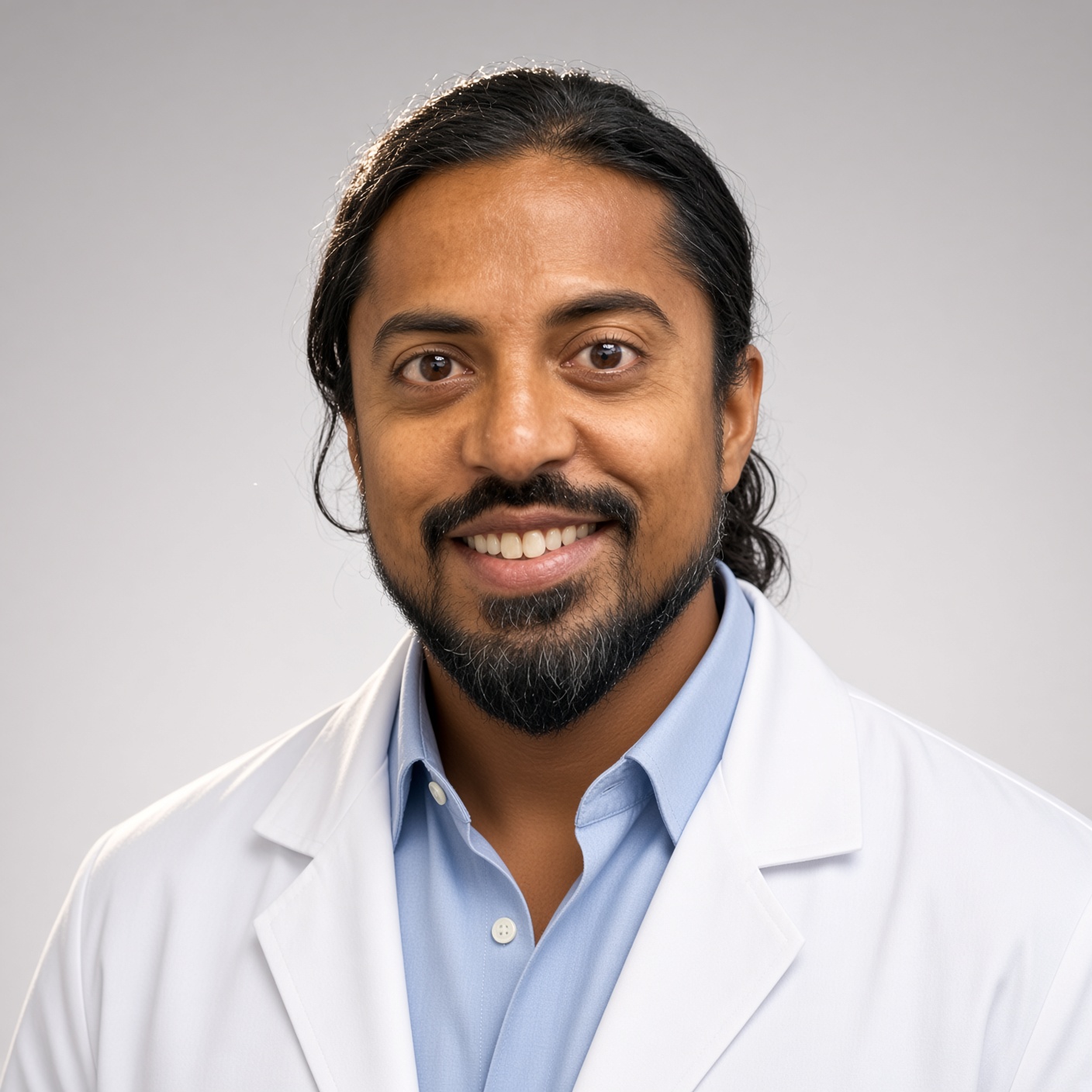
- Columbia UniversityDoctor of Medicine and MBA
- Duke University Medical CenterDiagnostic neuroradiology fellowship
- American Board of RadiologyBoard certified, CAQ Neuroradiology
Mobile imaging should never mean compromised imaging.
Catalyst Mobile Imaging was founded by Dr. Roman Raju, a board-certified radiologist with a Certificate of Added Qualification in Neuroradiology and more than a decade of high-volume practice behind him. He built the company around a single conviction: the quality of a study should never depend on the size or the location of the facility that ordered it.
Hospitals and physician groups are routinely forced to choose between speed and expertise. Catalyst is the other option, a physician-owned mobile MRI paired with subspecialty interpretation, delivered with the accountability of an owner rather than the indifference of a vendor.
Read Dr. Raju's full background
He earned his MD at Columbia University's College of Physicians and Surgeons and his MBA at Columbia Business School, taking both degrees together. He completed his internal medicine internship at UT Southwestern, his diagnostic radiology residency at SUNY Downstate, and his neuroradiology fellowship at Duke. His undergraduate degree in neuroscience is from Tulane, summa cum laude and Phi Beta Kappa.
In practice he has read across neuroradiology, spine and musculoskeletal imaging, and has performed myelograms, arthrograms and image-guided pain management. Inside a national practice of roughly seventy radiologists he has read above the group average every year since 2013. He currently reads for a national screening service that images the whole body, for a teleradiology group concentrated in the Pacific Northwest, and across the VA system.
The business degree is not decoration. He has been through the sale of a radiology practice into a national group, co-founded a company delivering American radiology expertise abroad, and wrote his business-school operations research on precisely this problem: how facilities running several MRI sites serve different patient populations without wasting capacity. Catalyst is that work put into practice.
Training
- Duke University Medical CenterDiagnostic neuroradiology fellowship
- SUNY Downstate Medical CenterDiagnostic radiology residency
- UT SouthwesternInternal medicine internship
- Columbia Business SchoolMBA
- Columbia University, College of Physicians and SurgeonsDoctor of Medicine
- Tulane UniversityBS Neuroscience, summa cum laude
Certification
- American Board of RadiologyBoard certified
- NeuroradiologyCertificate of Added Qualification
Subspecialty focus
The questions that come up first.
Why place a unit instead of buying one?
You get capacity fast, without months of construction and a multi-million-dollar commitment. If your long-term plan is a fixed install, a placement bridges you to it without losing volume in the meantime.
How fast can you deploy?
Typically a few weeks from agreed terms, depending on site readiness and transport distance.
What do the terms look like?
Flexible. We lead with a short-term placement carrying an early-return option, and are open to longer terms. Transport, setup and teardown are billed to the customer.
What does it cost?
A custom monthly quote based on term, site and logistics. Tell us the situation and we will come back with a real number rather than a range.
Do you provide staffing and interpretation?
The scanner is covered either way. You can add technologist staffing and subspecialty reads, or run it with your own team.
Do you offer radiology staffing on its own?
Yes. Subspecialty reads are available bundled with a placement or standalone, when your radiologists are short-staffed or off-hours.
What areas do you serve?
Placement is nationwide. Interpretation is licensed in Texas, California, New York, Florida, Colorado, Oregon and Hawaii.
What does my site have to provide?
A level pad with truck access, appropriate power, and a patient-flow plan. We handle transport, setup and testing.
Can we extend or adjust the term?
Yes. That flexibility is the point of placing rather than building.
Let's solve your capacity need.
Tell us what you are covering and when. You will hear back from a person, with a real number.
Prefer to talk it through?
Schedule a 15-minute call